Low conversion
The storefront needed to turn brand traffic and campaign interest into stronger product clicks, add-to-cart activity, and completed purchases.


Digital solutions for a snack commerce brand replatformed from Magento to GraphCommerce to improve speed, customer flow, and conversion efficiency.
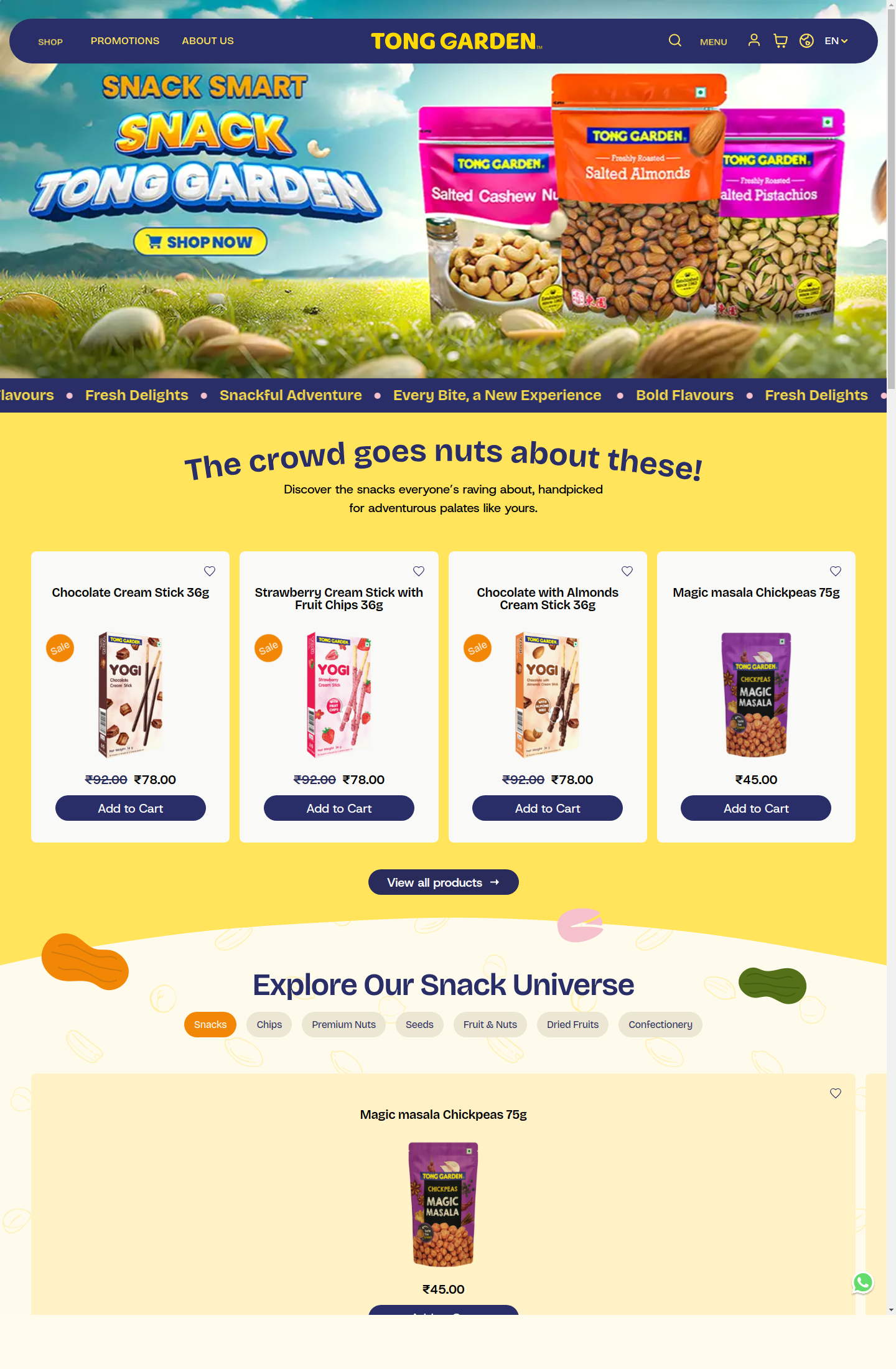
Tong Garden is one of Asia's leading snack brands, and its India storefront brings together nuts, seeds, dried fruits, chips, confectionery, promotions, and membership-led D2C shopping in one consumer-facing experience.
This project was delivered in partnership with Thirteen Ideation, a creative studio that led the idea- and design-first direction for the brand experience. Ethnic Infotech supported the commerce implementation by moving the storefront from a more expensive Magento setup to GraphCommerce so the brand could get a faster, cleaner, more conversion-ready experience.
The storefront needed to turn brand traffic and campaign interest into stronger product clicks, add-to-cart activity, and completed purchases.
The previous Magento-led storefront experience carried more cost and complexity than the business wanted for ongoing growth.
Product discovery, category movement, and purchase flow needed to feel quicker and more intuitive for D2C snack buyers.
Make key pages feel faster and more responsive across home, category, and product journeys.
Simplify discovery, product comparison, and add-to-cart flow so customers can move from campaigns to purchase with less friction.
Shift from the heavier Magento storefront layer to a more efficient GraphCommerce delivery model.
Create a clearer, more conversion-ready experience for promotions, featured products, and repeat D2C shopping.
In partnership with Thirteen Ideation, the project reworked Tong Garden's digital commerce experience around faster discovery, clearer merchandising, and lower platform complexity. Their team shaped the brand and design direction, while Ethnic Infotech focused on the technical migration and storefront implementation.
The customer-facing experience was moved from a heavier Magento setup to GraphCommerce, while Magento continued supporting the underlying commerce engine. This allowed the storefront to be rebuilt around better performance, cleaner category discovery, stronger promotional visibility, and a smoother flow from landing page to product detail and cart.
The result is a more efficient commerce stack that improves speed perception, supports a better user journey, and gives the brand a stronger foundation for conversion optimization and ongoing campaign delivery.
Rebuilt the customer-facing layer on GraphCommerce while preserving Magento as the backend commerce engine.
Tightened navigation, campaign hierarchy, product cards, and product-detail presentation around faster buying decisions.
Reduced storefront overhead with a frontend better suited to performance tuning and ongoing growth iterations.
GraphCommerce powers a faster customer-facing experience while Magento continues handling commerce operations.
Home and landing sections surface offers, featured products, and seasonal merchandising more clearly.
Shoppers can move through snacks, chips, premium nuts, seeds, dried fruits, and related collections with less friction.
Product pages present pricing, descriptions, and buying actions in a more direct flow.
Key storefront paths were tuned for smoother use across devices and touchpoints.
The implementation aligned with Thirteen Ideation's idea-first creative and design direction.
GraphCommerce improves the feel of navigation, product browsing, and key commercial interactions.
Refined navigation, category paths, and product pages reduce friction from discovery to cart.
Moving away from the heavier Magento storefront helps reduce cost and complexity in day-to-day commerce delivery.
A more focused commerce experience supports better product visibility and purchase intent.
Faster front-end interactions help shoppers reach products and promotions with less waiting.
Categories, offers, and product cards feel easier to scan, compare, and act on.
The stack is better positioned for future campaigns, experimentation, and ongoing optimization.
Let's talk about your current platform costs, conversion gaps, and the right frontend architecture for a faster, cleaner commerce experience.